

7 Key Steps in Psychiatric Medication Management for Mental Health Treatment
Psychiatric medication management is a structured process that helps individuals achieve stability and improve their quality of life. It involves careful evaluation, ongoing monitoring, and collaboration between the patient and their healthcare provider. For families in the Wake Forest, NC area, understanding these steps is essential for supporting children and teens who may be navigating mental health challenges. LifeCare Counseling and Psychiatry provides comprehensive psychiatric services that combine evidence-based methodologies with compassionate, faith-based care to ensure the best possible outcomes for your family. For additional details, review the lifecarecc com.
1. Comprehensive Initial Evaluation
2. Establishing a Treatment Plan
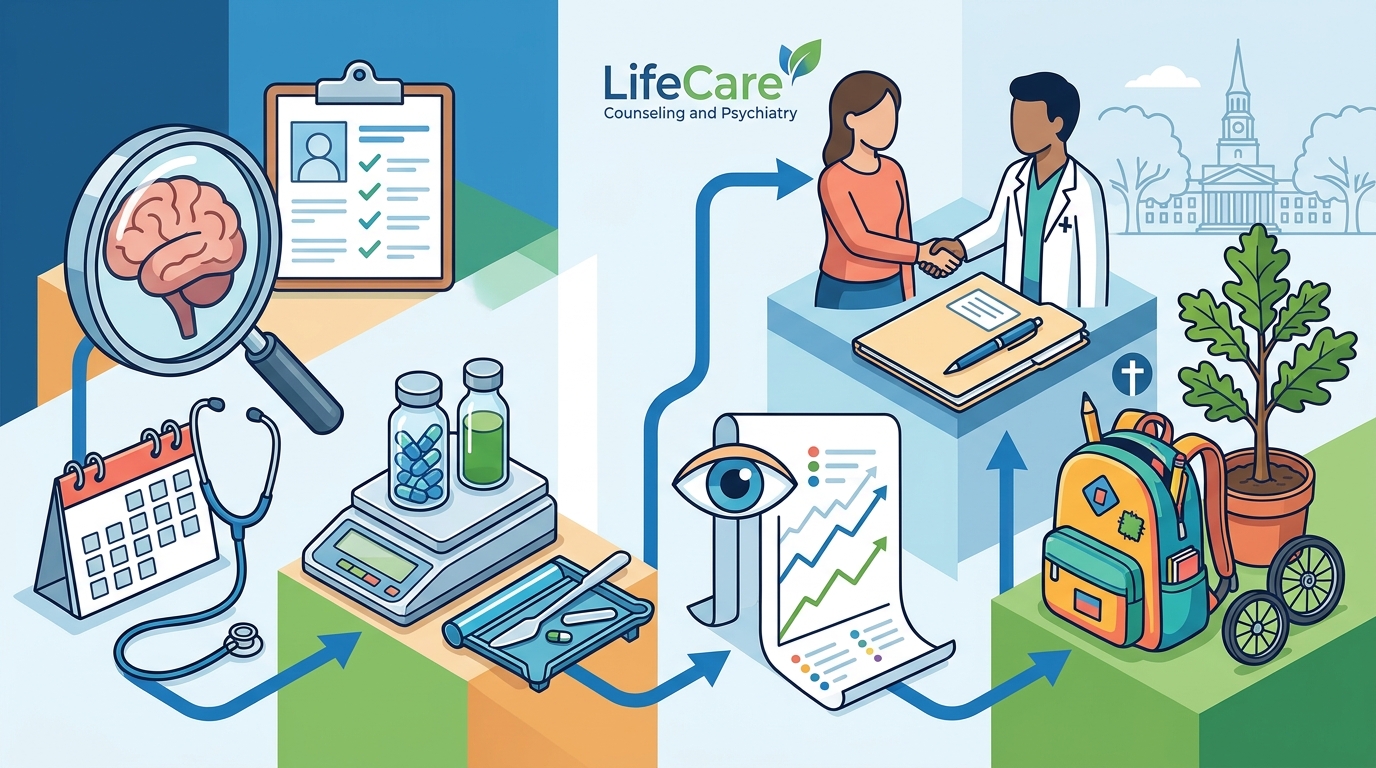
The treatment plan defines the goals and the specific medications to be used. The psychiatrist works with the patient and their family to set realistic short-term and long-term goals. This plan outlines the type of medication, the starting dosage, and the expected timeline for seeing results. It is important to understand that finding the right medication may take several tries, as individual responses to psychiatric drugs can vary significantly. For additional details, review the About.
3. Starting with a Low Dosage
Medications are typically started at a low dose to minimize side effects. This approach, often referred to as "start low and go slow," allows the body to adjust to the new medication. For adolescents, this is especially important to avoid overwhelming them with physical changes. The provider will monitor the patient closely during this initial phase to ensure safety and comfort.
4. Regular Monitoring and Follow-Up
Ongoing appointments are necessary to track progress and adjust the dosage. Medication management is not a one-time event but a continuous process. The psychiatrist will schedule regular follow-ups to assess how the medication is working and to address any side effects. This monitoring helps ensure that the patient remains on the optimal dose for their specific condition.
5. Addressing Side Effects
Managing side effects is a critical part of maintaining adherence to the treatment plan. Some patients may experience unwanted physical or emotional changes when starting a new medication. The provider will work with the patient to mitigate these effects, which may involve adjusting the dosage or switching to a different medication. Open communication about side effects is key to preventing treatment discontinuation.
6. Adjusting the Medication as Needed
The treatment plan may need to be modified over time to maintain effectiveness. As the patient's condition changes or as they grow and develop, the medication may need to be adjusted. This could involve increasing the dosage, adding a second medication, or tapering off a current one. The goal is to maintain stability while minimizing the impact on the patient's daily life.
7. Long-Term Maintenance and Review
Choosing the Right Approach
Frequently Asked Questions
How long does it take for psychiatric medication to work?
It can take several weeks for a medication to reach its full effect. The provider will monitor the patient during this period to ensure that the medication is working as intended.
Can children and teens take psychiatric medications?
Yes, children and teens can take psychiatric medications, but the dosage and type of medication must be carefully chosen by a qualified psychiatrist. The provider will consider the child's age, weight, and specific condition when making a recommendation.
What are the common side effects of psychiatric medications?
How often should I see my psychiatrist for medication management?
The frequency of appointments will depend on the patient's specific condition and the stability of their treatment. Initially, appointments may be more frequent, but they can be spaced out as the patient becomes more stable.
Can I stop taking my psychiatric medication if I feel better?
No, you should not stop taking your medication without consulting your psychiatrist. Stopping medication abruptly can lead to a relapse of symptoms. The provider will work with you to taper off the medication safely if it is no longer needed. Learn more: lifecarecc com.