

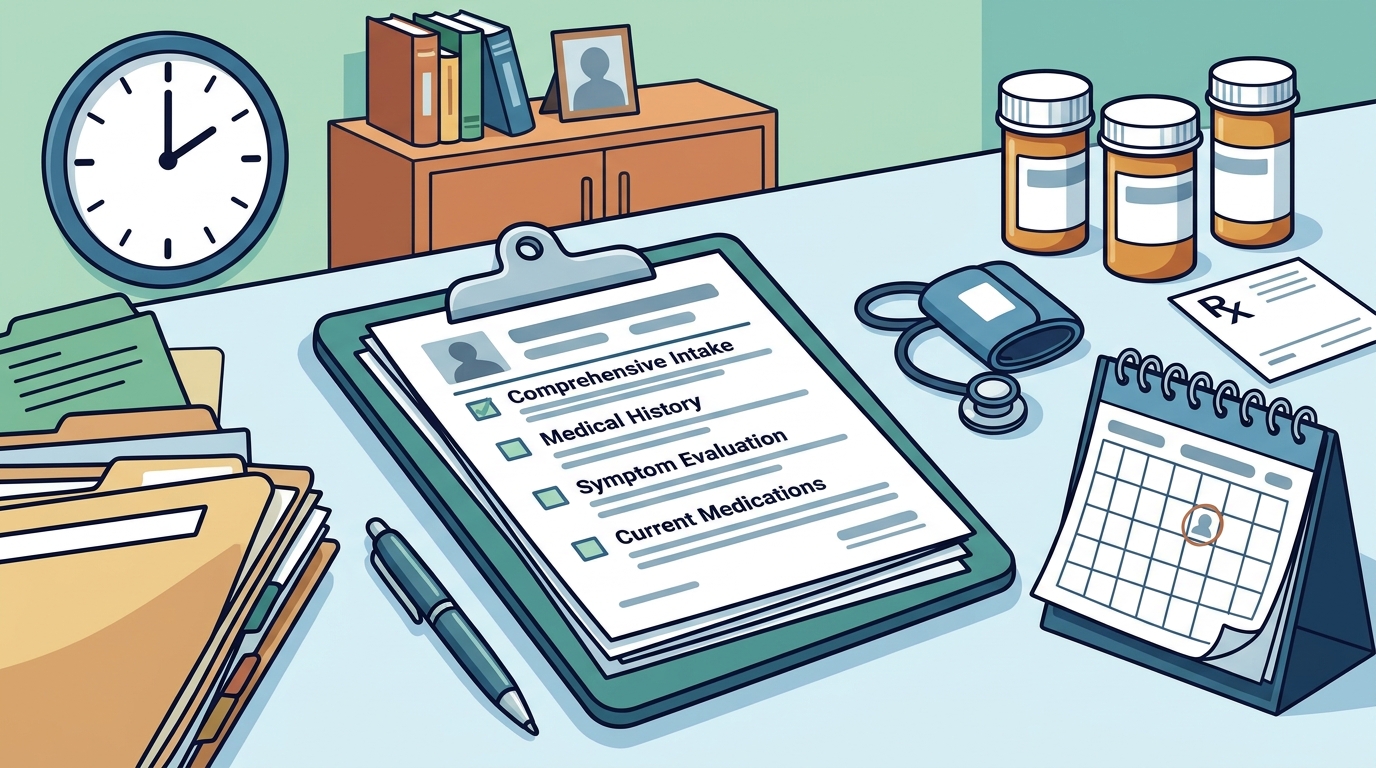
During your first psychiatric medication management appointment, you will complete a comprehensive intake, discuss your medical history, and establish a baseline for treatment. The provider will evaluate your symptoms, review any current medications, and determine if a prescription is appropriate. This initial visit focuses on building a relationship and creating a personalized care plan rather than immediate medication changes. At LifeCare Counseling and Psychiatry, we approach this process with compassion, combining clinical expertise with a supportive environment to ensure you feel heard and understood from the very first session. For additional details, review the lifecarecc com.
The Intake Process and History Review
The first appointment is primarily a diagnostic and relationship-building session. A psychiatric evaluation is a detailed assessment of your mental health status, medical history, and family background. This process allows the provider to understand the full context of your struggles, including any previous treatments or hospitalizations. You will likely spend the majority of the hour answering structured questions about your symptoms, sleep patterns, and daily functioning. For additional details, review the Frequently Asked Questions.
Providers at LifeCare Counseling and Psychiatry prioritize a holistic view of the patient. We do not just look at symptoms in isolation; we examine how your mental health interacts with your physical health and spiritual well-being. This comprehensive approach ensures that any medication prescribed addresses the root causes of your distress rather than just masking symptoms. The goal is to restore physiological balance and correct functioning in the brain, which is an organ requiring specialized care. For additional details, review the About.
Genetic Testing and Personalized Treatment
One of the distinct advantages of modern psychiatric care is the ability to use genetic testing to guide treatment decisions. Pharmacogenomic testing is a laboratory analysis that examines how your unique genetic makeup affects your response to specific medications. By understanding your metabolic profile, providers can select medications that are more likely to be effective and less likely to cause adverse side effects. This data-driven approach reduces the trial-and-error phase that often frustrates patients.
At LifeCare, our psychiatric and therapy teams work together to address the whole person. We integrate genetic testing results with clinical observations to bring healing to the body, mind, and soul. This collaborative model ensures that medication management is not a standalone intervention but part of a broader therapeutic strategy. For patients in the Wake Forest, NC area, this level of personalized care is available through our local offices, ensuring you receive high-quality treatment close to home.
Considerations for Children and Teens
How to Prepare for Your Visit
Preparation is key to making the most of your first appointment. Bring a list of all current medications, including over-the-counter supplements and vitamins. Note down any side effects you have experienced with previous medications, as this information is critical for safety. It is also helpful to write down your primary concerns and goals for treatment. This ensures that you do not forget important details during the conversation.
Consider bringing a trusted family member or friend for support, if you wish. Having a second set of ears can help you remember the provider's instructions and recommendations. At LifeCare, we encourage patients to be honest and open about their experiences. Our providers are committed to creating a judgment-free environment where you can share your struggles without fear. This transparency is essential for developing an effective treatment plan that aligns with your values and goals.
Key Takeaways
- The first appointment focuses on intake, history review, and building rapport rather than immediate medication changes.
- Genetic testing can help personalize medication choices by predicting how your body will respond to specific drugs.
- For children and teens, parental involvement is crucial in assessing behavioral and emotional changes.
- Preparation, such as listing current medications and symptoms, helps streamline the diagnostic process.
Frequently Asked Questions
How long does the first psychiatric appointment take?
Initial appointments typically last between 60 and 90 minutes. This extended time allows for a thorough intake and comprehensive history review. Follow-up appointments are usually shorter, focusing on monitoring progress and adjusting treatment as needed.
Will I be prescribed medication during the first visit?
Not necessarily. The first visit is primarily for evaluation and diagnosis. If a prescription is deemed appropriate, the provider may start a low dose or wait for further assessment. The decision depends on the severity of symptoms and the provider's clinical judgment.
Does LifeCare offer telehealth for medication management?
Can I combine medication management with therapy?
Yes, and it is often recommended. At LifeCare, our psychiatric and therapy teams work together to address the whole person. Combining medication with counseling can enhance treatment outcomes by addressing both biological and psychological aspects of mental health.
What if I am not comfortable with medication?
Your provider will respect your preferences and discuss alternative treatment options. Therapy, lifestyle changes, and other non-pharmacological interventions may be recommended. The goal is to find a treatment plan that aligns with your values and goals.
How often will I need to see the provider after the first visit?
Follow-up appointments are typically scheduled every 4 to 8 weeks initially. This allows the provider to monitor your response to medication and make adjustments as needed. The frequency may decrease as your condition stabilizes. Learn more: lifecarecc com.