

7 Key Steps in Managing Psychiatric Medications with a Faith-Based Approach
Step 1: Comprehensive Psychiatric Evaluation
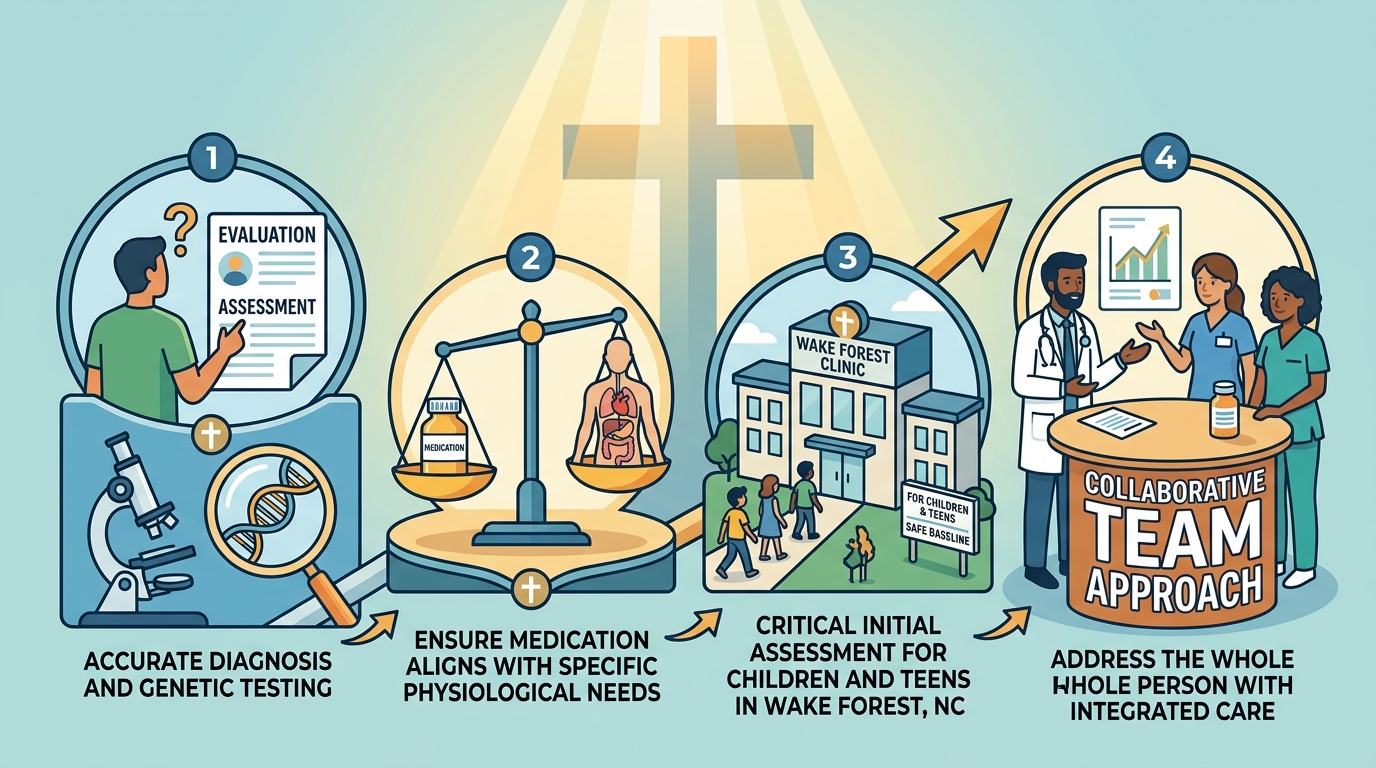
Accurate diagnosis is the foundation of effective medication management. A comprehensive psychiatric evaluation utilizes genetic testing and clinical assessment to determine the best treatment choices. This step ensures that the medication prescribed aligns with the patient's specific physiological needs. For children and teens in Wake Forest, NC, this initial assessment is critical for establishing a safe baseline.
Step 2: Understanding the Role of Faith in Healing
Faith provides a spiritual framework that complements clinical treatment. Faith-based counseling integrates spiritual beliefs with evidence-based methodologies to address the body, mind, and soul. This perspective helps patients find meaning and peace during their recovery journey. It is not a replacement for medical care but a supportive element that enhances overall well-being.
Step 3: Collaborative Treatment Planning
Step 4: Monitoring Side Effects and Adherence
Consistent monitoring is essential to minimize side effects and maintain adherence. Medications can affect people in different ways, and it may take several tries to find the medication that works best with the fewest side effects, according to the National Institute of Mental Health. Non-adherence is a significant challenge in major psychiatric disorders, which are a growing public health concern attributed to 14% of the global burden of diseases, as noted in a systematic review. Regular check-ins help identify and address these issues early.
Step 5: Integrating Therapy with Medication
Combining therapy with medication addresses both symptoms and underlying causes. Psychiatric medications have been leading treatments for a broad range of mental disorders and have decreased the need for long-term hospitalization, according to Wikipedia. Therapy provides the tools for coping and growth, while medication stabilizes physiological balance. This dual approach is particularly effective for anxiety disorders, PTSD, and OCD, as described in a systematic review of approved psychiatric medications.
Step 6: Addressing Stigma and Community Support
Step 7: Regular Review and Adjustment
Treatment plans must evolve as the patient's needs change. Psychiatric pharmacy continues to grow with a focus on helping individuals recover from mental health and substance use disorders, as noted in a PMC article. Regular reviews ensure that the medication remains effective and that any new developments in the pipeline, such as those in Phase III clinical trials, are considered. This ongoing process ensures long-term stability and well-being.
Choosing the Right Approach
Frequently Asked Questions
Is faith-based counseling a replacement for psychiatric medication?
No, faith-based counseling is a complementary approach that supports, but does not replace, clinical treatment. It addresses the spiritual and emotional aspects of healing alongside medical care.
How often should psychiatric medications be reviewed?
Medications should be reviewed regularly, typically every few months, or sooner if side effects or changes in symptoms occur. This ensures the treatment remains effective and safe.
Can children and teens receive faith-based psychiatric care?
What is the role of genetic testing in psychiatric evaluation?
Genetic testing helps determine the best treatment choices by identifying how a patient's body may respond to specific medications. This can reduce the trial-and-error process of finding the right medication. Learn more: lifecarecc com.